The short version
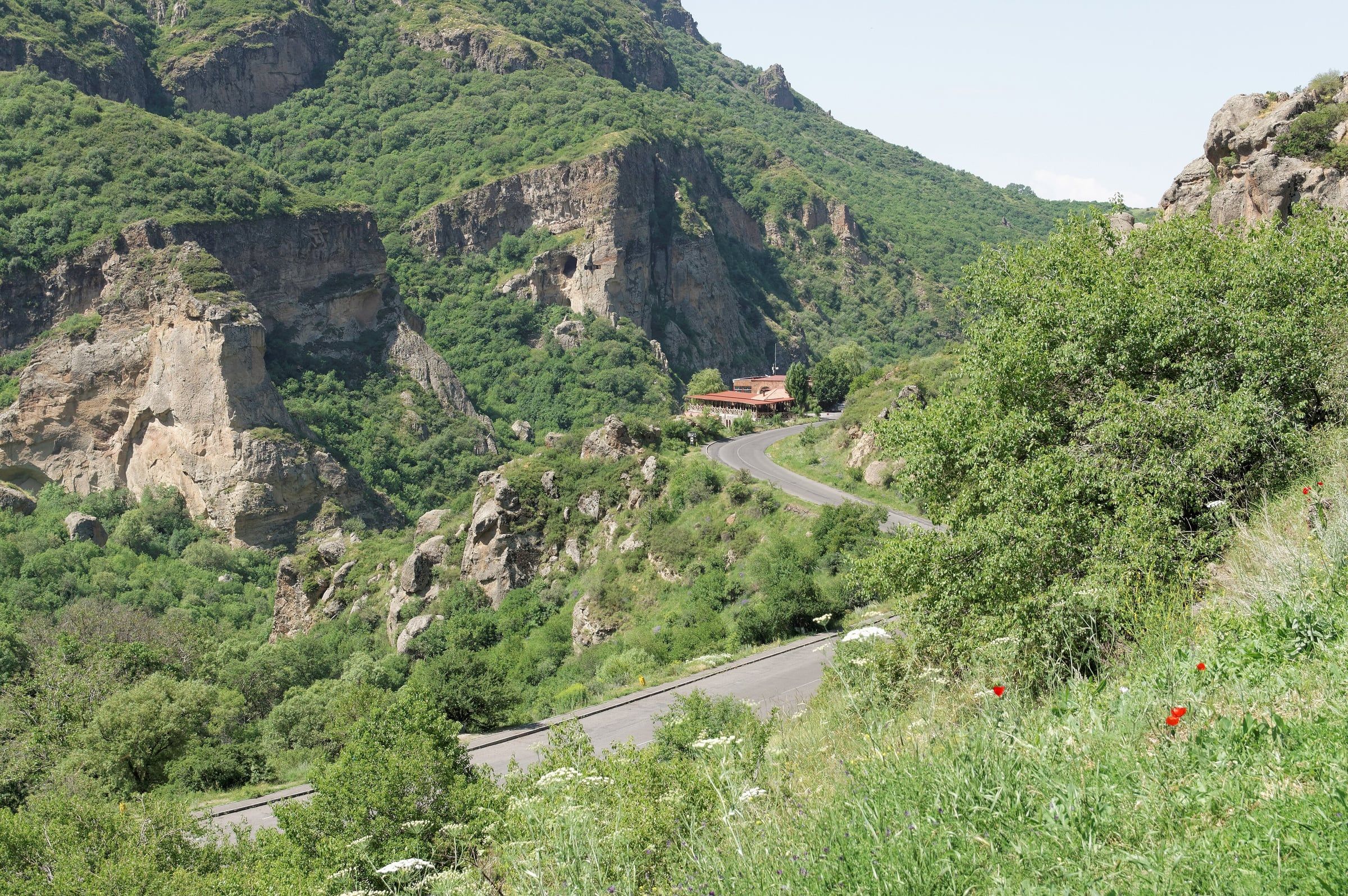
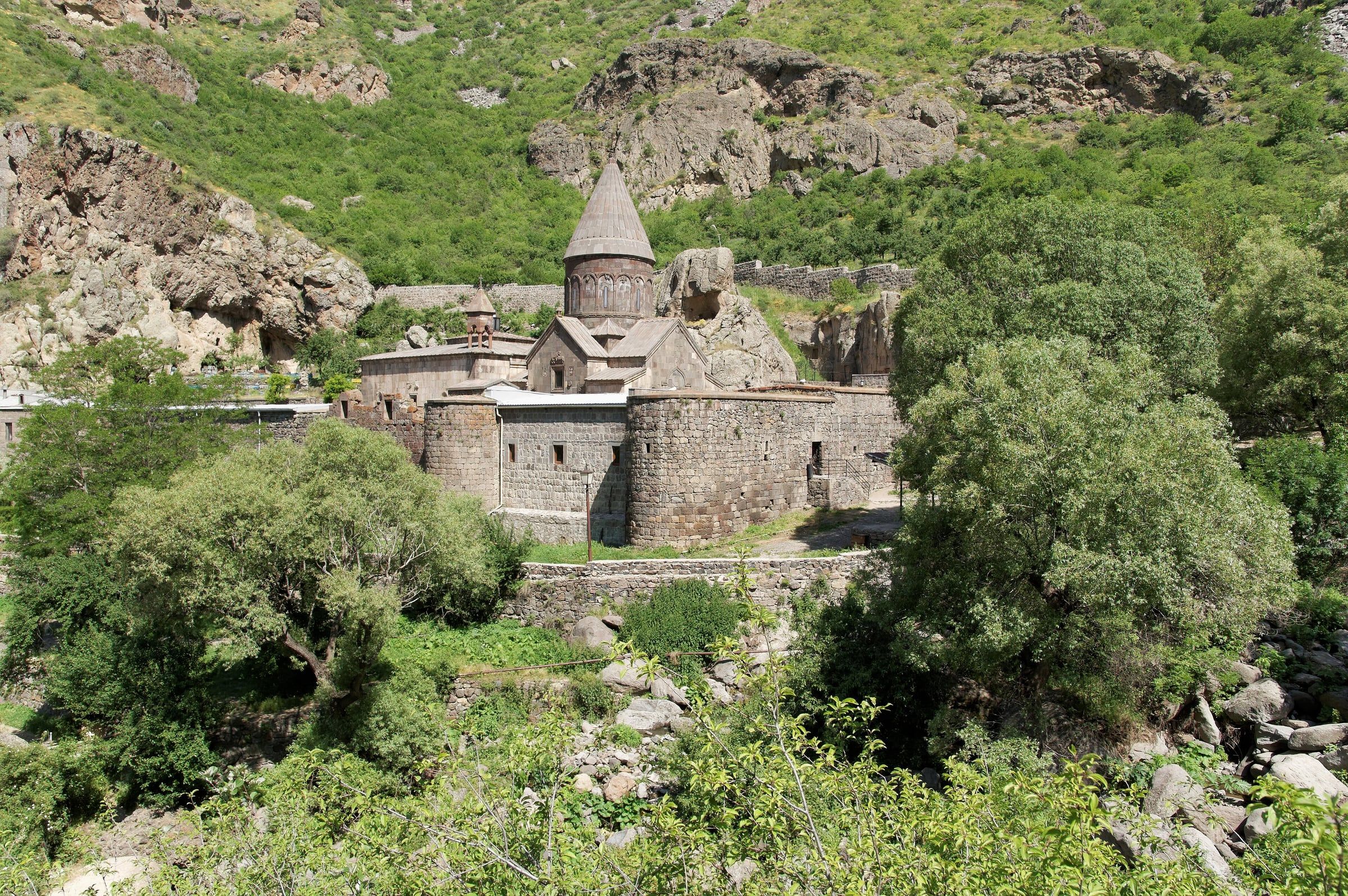
Geghard is a monastery set against the cliffs of the Azat river gorge, in Kotayk Province. Some of its churches are built from cut stone. Others are carved straight into the rock face. It sits about 36 to 40 km from Yerevan by road, and about an hour away by car.
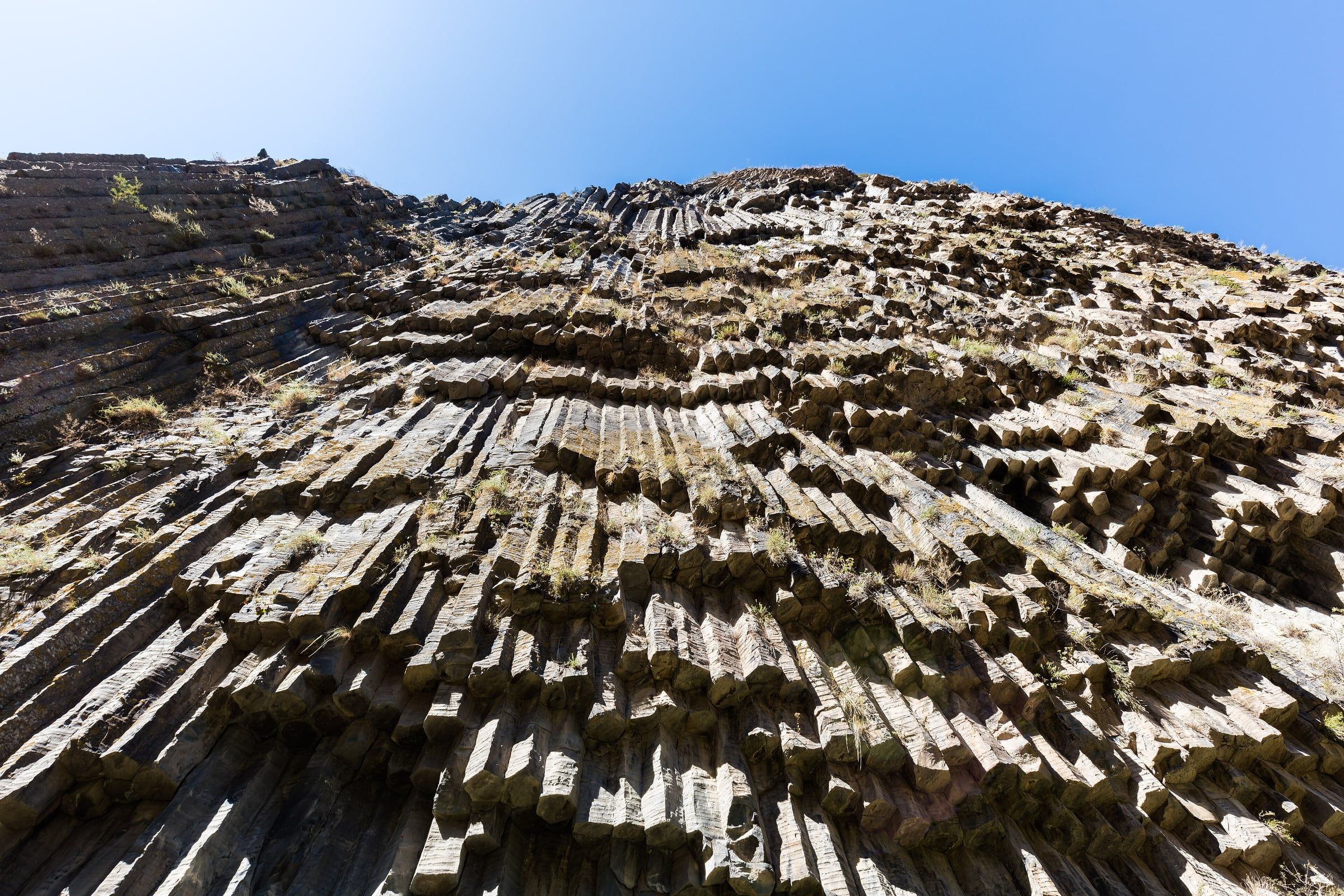
Give it one to two hours. Wikipedia describes it as one of the most frequented tourist destinations in Armenia, so a midday arrival can mean sharing the small chapels with tour groups. Most visitors see it on the same trip as Garni Temple and the Symphony of Stones. If you would rather not organise transport, the day tours page compares trips that cover all three.
What Geghard is
Armenian tradition says St Gregory the Illuminator founded the monastery in the 4th century. It was first called Ayrivank, which means monastery in the rocks or cave. The Armenian tourism committee adds that it was a working centre of learning, with a school, a scriptorium (the room where manuscripts were copied) and a library.
The name you see on signs now, Geghard, points to a relic. The monastery is said to have kept the spear that wounded Christ on the cross for about 500 years. That relic is now in the treasury at Echmiadzin.
Most of what you walk through belongs to the 13th century. The main church, Katoghike, dates to 1215 according to Wikipedia. It is still an active pilgrimage site, so expect worshippers as well as visitors.
The rock-cut churches
Start with the gavit, the covered entrance hall in front of an Armenian church (some guides call it a narthex). At Geghard it is partly freestanding and partly cut into the cliff, and it was built in the early 13th century.
The rock-cut parts are the reason to come. The first church carved fully from the rock dates to the middle of the 13th century. The tourism committee says before 1250, and Wikipedia says about 1240. A second followed in 1283. Wikipedia describes the first as cross-shaped in plan, so look at the layout as well as the carving.
The upper chamber dates to 1288 and is a tomb for Papak Proshyan and his wife Ruzukan. On the hillside outside you will also see khachkars, which are Armenian carved stone crosses. One visitor guide describes rock chapels carved with trees, doves, oxen and lions, and a spring inside one of them where pilgrims drink and make wishes.
The acoustics
Visitors often mention the sound. Wikipedia singles out the upper tomb chamber for its acoustics, and one 2026 trip report describes powerful acoustics in the gavit, where the writer heard three women singing softly in a dim side chapel.
We found no written rule on singing. If you want to try your voice, ask first, stay out of the way of any service, and keep it quiet. Do not clap or shout to test the echo.
Is it worth the trip?
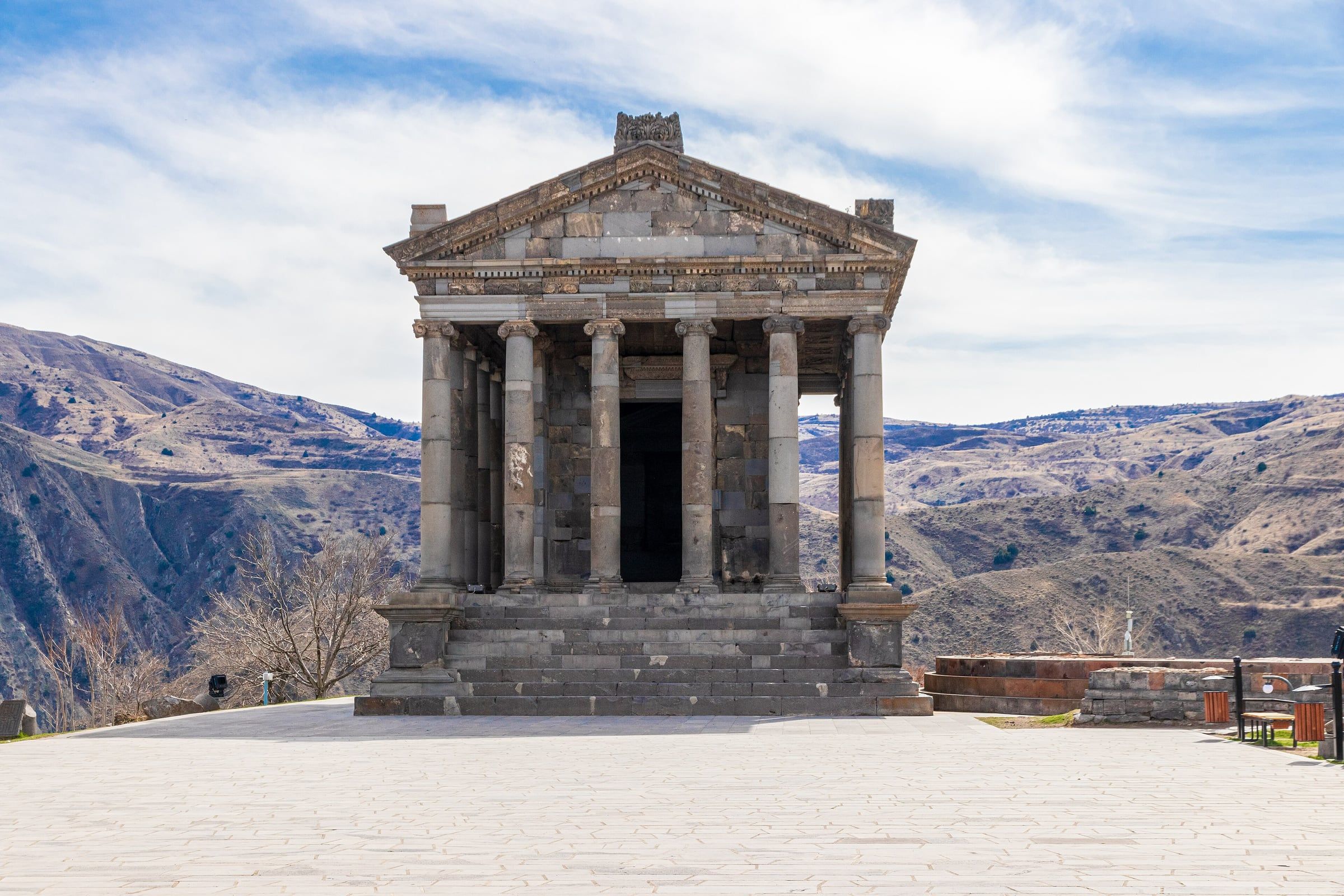
Yes, if you like old churches and carved stone. The appeal is in the cut rock and the detail rather than in grand spaces, and some rooms are dim (one guide mentions a dim side chapel). Geghard is also a different kind of site from Garni, which is a first-century temple covered on our Garni Temple page, so the two make a good pair.
The UNESCO listing
UNESCO lists the property as the Monastery of Geghard and the Upper Azat Valley. It was inscribed in 2000 as a cultural site under criterion ii, with reference number 960 (Wikipedia). The name includes the valley, so the listing is about the setting as well as the buildings.
The tourism committee dates the churches and tombs to between the 4th and the 13th century, and describes most of them as cut into the rock.
Opening times, entry and parking
We could not find an official timetable for Geghard. Independent guides updated in 2025 and 2026 report roughly 8am or 9am to 8pm daily. One site says daylight hours only, and another says hours vary with the season and with services (checked October 2026). Use these as a guide, and ask your driver or tour operator for the day.
Entry is free, and donations are welcome. The car park charges a fee, reported as 200 dram in a guide updated in 2025. The dram (AMD) is Armenia’s currency.
Tip
Go in the morning or late afternoon. One local transfer service says those are the times with softer light and fewer tour groups.
Dress code and etiquette
There is no published dress code that we could find, but treat Geghard as a place of worship. One guide says to cover your shoulders and knees. Another recommends comfortable shoes and modest clothing, partly because of the stone steps.
Keep your voice low, do not interrupt services, and ask before photographing people who are praying. If you see pilgrims at the spring, watch first before joining in.
On the walk from the car park you will pass stalls selling bread, fruit lavash (dried fruit rolled into sheets) and souvenirs.
Getting here from Garni and Yerevan
Garni is about 30 km from Yerevan, and Geghard is further up the same valley. Wikipedia puts Geghard at 7 km beyond Garni, while a tour operator lists 10 km and 20 minutes of driving. Another guide gives 15 to 20 minutes. Take the figures as a guide rather than a measurement.
If you take the marshrutka (shared minibus), it runs from Yerevan to Garni and on to Goght village. It does not reach the monastery, and one guide measures the last stretch from Goght at 3.8 km, about an hour on foot. Guides mention hitchhiking and taxis for that leg. Our getting there guide covers buses, taxis and hire cars.
A sensible order for the day
Several guides suggest going to Geghard first, then the Symphony of Stones, then Garni Temple. One private tour page lists that kind of order: Geghard at 11am, the Symphony of Stones at 12:30pm, then Garni at 1:10pm.
For timing, one guide reckons 5 to 7 hours in total for Garni and Geghard, or 6 to 8 hours if you add the Symphony of Stones and a long lunch. A guide updated in July 2026 describes hiring a private driver for Geghard and Garni: picked up at 8am, back in Yerevan just after 1pm, for 15,000 dram. The writers say every driver they asked at Republic Square quoted the same fixed price.
Longer tours add other places. Guides mention Khor Virap (see our Khor Virap page) and Lake Sevan (see our Lake Sevan page). Add those and the day stretches well beyond a morning.