- Altitude of Lake Sevan above sea level
- 1,900 m
- Surface area of the lake, the largest in Armenia
- About 1,240 km²
- Year Sevanavank was founded, according to a church inscription
- 874
What it is and whether it is worth the trip
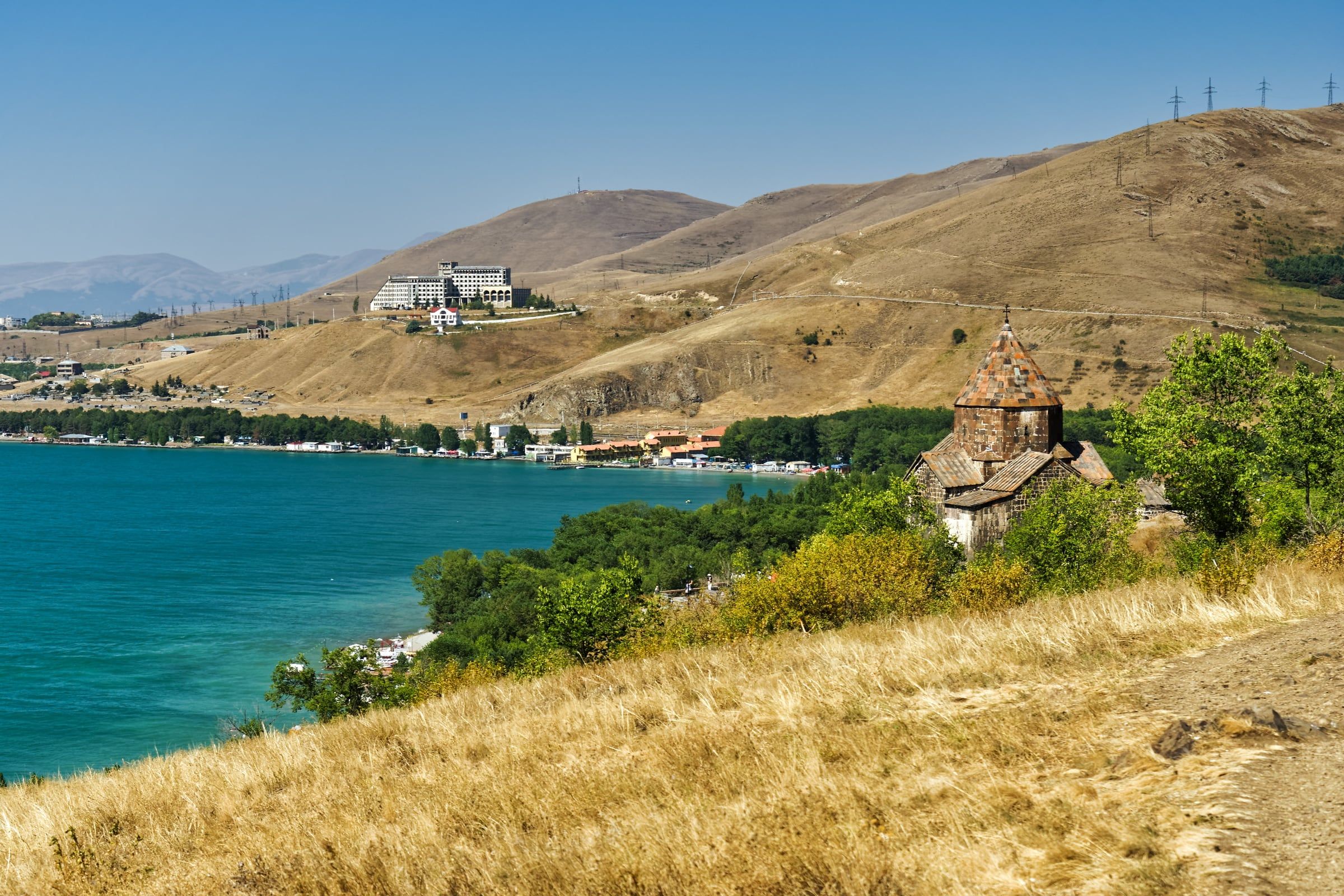
Lake Sevan is the largest lake in Armenia and in the wider Caucasus, according to Wikipedia. It covers about 1,240 square kilometres and sits at roughly 1,900 metres above sea level, so the setting feels more open and mountainous than the city you left.
It is more of a scenic stop than a sightseeing list. The lake itself is mostly beaches, cafés and open water. The sight most people come for is Sevanavank, a monastery on the northwestern shore. Go for the views and the water, not for a packed itinerary.
The lake has also changed shape. Soviet-era drainage works, begun in 1933, lowered the level by around 20 metres, according to Wikipedia, and later tunnels were built to feed water in. That drop is why Sevanavank, once on an island, now stands on a peninsula.
What to see and how long to allow
Sevanavank is the main stop. An inscription dates its founding to 874, by Princess Mariam, daughter of Ashot I, as Wikipedia reports. Two small cross-shaped churches remain, Surb Arakelots (Holy Apostles) and Surb Astvatsatsin (Holy Mother of God). The tourism committee describes a short climb up to them, with wide views of the water, and recommends sunrise or sunset.
Beyond the monastery, the committee lists sandy beaches and beach cafés around Sevan town and the peninsula. The northern shore has calmer water, guest houses and lakeside cafés. Further afield are Hayravank Monastery, the Noratus cemetery of khachkars (carved cross-stones) and, for hikers, Mount Artanish.
The lake lies within Sevan National Park, designated in 1978, and is also listed as a Ramsar wetland of international importance, since 1993, according to Wikipedia. The peninsula also has the Sevan Writers’ House, which the tourism committee lists among the sights around the lake.
Try the local fish. The committee points to Ishkhan trout, also called the “prince fish”, served grilled, fried or baked.
On a combined Sevan and Dilijan tour, the lake is one stop in a day of 8 to 11 hours, so your time here is short. If you want to swim or have a long lakeside lunch, consider a Sevan-only trip.
Distance and travel time from Yerevan
The tourism committee gives about one hour by road. Wikipedia places Sevan town about 65 kilometres north-east of Yerevan, and puts Sevanavank on the peninsula roughly 3 kilometres east of the town. You can also reach the lake by minibus (marshrutka) or by train to the northern shore village of Shorzha, the committee says.
Tours usually pair Sevan with Dilijan. The itineraries we opened vary:
- Eurasia Travel: about 8 hours including transfers, covering Sevan, Sevanavank, Dilijan, Goshavank and Haghartsin.
- Armgeo: 11 hours, adding a stop at a wine and brandy factory in Ijevan.
- OneWay Tour: 10 to 11 hours, with Lake Parz and Old Dilijan added.
These are different routes, so compare the stop lists rather than only the hours. On the OneWay tour, meals and entrance fees are not included.
Opening times and fees
Checked October 2026: the tourism committee’s Lake Sevan guide gives no opening hours or entrance fee for the lake or Sevanavank, and we found no official figures, so we have listed none. Confirm anything time-sensitive on the day.
One practical tip
Ask the operator how long you actually stop at the lake. None of the three itineraries above states a time for each stop, and the length of your stay at the water is where tours differ most. If swimming matters, say so before you book.
How it fits with a Garni day
Sevan is a separate trip from Garni, Geghard and the Symphony of Stones. None of the operator itineraries we opened combines them in one day, and the Sevan and Dilijan day alone runs 8 to 11 hours. Plan them as different days.
If you have a few days in Yerevan, our main guide covers Garni and Geghard, and the day tours page compares the tours. For the other classic trips, see Dilijan and Khor Virap.